
Date
- 2026 Sep 16
- Expired!
Time
- 16:15
Location
- KTH / online
Presenter
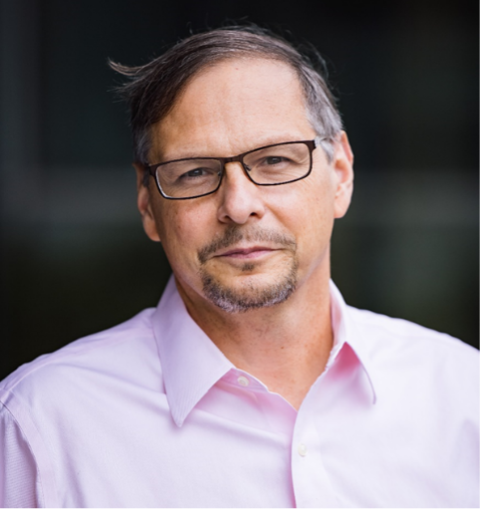
Seminar with Orlando Rojas – Lignin Colloids in Action: From Molecular Structure and Clustering to Functional Particles
Welcome to a seminar with Prof. Orlando Rojas on Lignin Colloids in Action: From Molecular Structure and Clustering to Functional Particles.
This seminar is held in connection with Fika Andriani’s thesis defence, for which Prof. Rojas will be the opponent.
The seminar is held at KTH, WWSC (Teknikringen 56), and is also available to attend online via Zoom.
For external on-site participation, please call Josefin Illergård at 0723072428 upon arrival.
Coffee will be served to participants attending on site.
Abstract:
Lignin is a major source of renewable aromatic carbon and its valorization is complicated, and enabled, by its chemical and structural diversity. Rather than representing a single, uniform macromolecule, “lignin” comprises a family of materials whose botanical origin, isolation history, and processing determine molecular association, interfacial behavior, and functionality.
This presentation examines how lignin can be retained and reconfigured within wood or isolated and assembled into colloidal constructs. Particular attention is given to the progression from molecular heterogeneity and clustering to particle formation, surface organization, and hierarchical assembly. By controlling solvent exchange, surface chemistry, particle size, and drying conditions, lignin is easily organized into spherical particles, particulate coatings, membranes, Pickering emulsion stabilizers, supraparticles, inks, and porous carbon architectures.
Selected examples illustrate how particle shape, wetting behavior, packing, optical absorption, and multiscale porosity translate into functions including hydrophobic and UV-protective surfaces, photonic response, superblack coatings and inks, carbon dioxide adsorption, and electrochemical energy storage. Reconfiguration and redistribution of lignin within native wood can likewise enable functions such as broadband light absorption and rain-driven contact electrification.
A central message is that maximum lignin purity is not always necessary. Instead, the intended function should determine the required degree of fractionation, functionalization, and colloidal control. This structure-assembly-function perspective offers a pathway for converting diverse technical lignins into higher-value materials through scalable, resource-efficient, and application-driven processes.
Contact:
Professor Orlando J. Rojas
Department of Chemical and Biological Engineering, Department Chemistry and Department Wood Science, University of British Columbia, 2360 East Mall, Vancouver, BC, Canada V6T 1Z3. Email: orlando.rojas@ubc.ca; Web: https://rojas.chbe.ubc.ca/
Biography:
Orlando J. Rojas is Canada Excellence Research Chair in Bioproducts at the University of British Columbia and Director of the BioProducts Institute (BPI). Beginning in October 2026, he will also hold joint appointments at the University of Tennessee and Oak Ridge National Laboratory as a UT–ORNL Governor’s Chair. His research focuses on interfacial phenomena, soft matter, and nanostructured biopolymers, especially cellulose, lignin, chitin, and related colloidal systems, and on assembling bio-based materials as alternatives to fossil-derived products.
As Director of BPI, he has built an interdisciplinary platform connecting engineering, chemistry, forestry, and policy. He previously served as Finland Distinguished Professor at Aalto University, where he directed the first years of the FinnCERES Bioeconomy Flagship with VTT, and held faculty positions at North Carolina State University. He is the recipient of the Anselme Payen Award and an elected Fellow of the American Chemical Society, the Finnish Academy of Science and Letters, TAPPI, and the International Academy of Wood Science. He has held an ERC Advanced Grant and is consistently ranked among the top 1% of researchers worldwide by citations (Clarivate).
Professor Rojas has supervised more than 55 postdoctoral fellows, 71 PhD students, and over 52 MSc students, and hosted more than 145 visiting researchers. He has authored approximately 670 peer-reviewed publications, with an h-index exceeding 119 and about 63,000 citations. His work continues to shape renewable materials research and technologies addressing sustainability, climate change, and resource efficiency.
Powered by Modern Events Calendar